
In the past half year alone we’ve witnessed two populist heroes, one of them mighty, felled by their history of sexually abusing women. The mighty one was the late Cesar Chavez; the lesser one, Graham Platner.
Chavez was revered as a working man’s god. Platner was working on it.
I’m no cynic. I don’t believe admired public figures will inevitably be exposed as rotters but, if and when they are, I see them as finished. I may be shocked or exasperated, but once I learn a public figure has been cruel or violent to vulnerable creatures, I don’t waste any time excusing them.
Quite a while ago, I found myself on a path leading away from heroes. I came to see heroic actions as instances, not as permanent auras.
When potential heroes show up on the public scene, I absorb the life background, the values, the ideas. I watch what they do with interest, not suspicion. And I admire what’s admirable, a talent for whatever has caused them to attract excited notice.
I don’t worship any of them. I am sans a mighty god; if I don’t kneel to an invisible diety, it’s not likely I’d become a groupie of a simple human hero — although I have come close to hero-worship with a football player or two.
Actually, football players are excellent models for my thesis here, since it’s written in the contract we sign when we fall for a sport that no player could possibly reach the compleat perfection inherent to the heroic ideal. We know they are flawed. A football player, at his best, will never be a god for eternity.
The absence of almightys in my life can perhaps be ascribed to the books I was given as a child, none of which was a bible. No Hans Christian Andersen or bros Grimm, either; my child literature was Greek and Roman myths. Which is why I’m now, in the face of collapsed demi-gods, revisiting Achilles and the Heel — his — as the avatar for our immediate world.
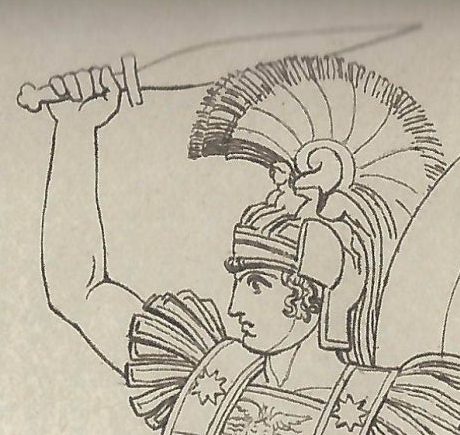
Achilles
For those of you who don’t know the tale, Achilles, considered the greatest of all Greek warriors, was born to a mortal father and a Nereid, an immortal water nymph. But the baby Achilles wasn’t immortal, or not entirely.
This business is a bit hazy. As usual, there were rumors, dire prophesies. So his frantically protective mother dipped her infant son into the River Styx, which conveyed upon him immortality. I guess he didn’t get anything from his mother’s genes.
Never mind. Gods back then didn’t have genes. Nor were they intelligent. To dip Achilles into the Styx, Thetis didn’t do the smart thing — take the baby for an underwater swim and then pull him out. (I mean, she was a water nymph!) But no. She grabbed the baby’s heel and holding onto him, lowered him into the river, leaving that heel vulnerable.
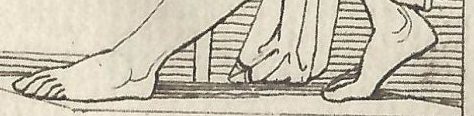
The Heels of Achilles
However, Thetis did us all a favor by producing a perfect metaphor for heroes: they have Fatal Flaws.
Now, Achilles could only be considered admirable to the ancient Greeks, whose gods were themselves a miserable bunch of sinners, stinkers and betrayers. Like them, Achilles had significant character flaws. He was a sulky pretty-boy; his GOAT status was based on his ferocious skill with sword and spear, i.e., how many people he had killed.
Violence against people who cannot match you in violence seems to be the essence of mighty Greek heroes. Maybe it’s the essence of some men who are seen as our contemporary heroes, too.
However, we should not give up on the men who come forward to battle for us and our human rights, at least not until we learn about their heels.
Still, we don’t have to worship them as heroes.
*Credit to John Flaxman (1775-1826), from whose illustrations of a 1943 edition of the Iliad I carved out those classical snippets.